
The Dompost reported recently that in the event of a major earthquake, Wellingtonians might have to be prepared to survive up to three weeks without water…
Now, I know we are all meant to have water stored away, 3 litres per person per day, and to change the water at least every two months or so. That’s manageable if you have a small household, but becomes a bit more problematic if you have a large number of people.
Could there be a use for small water tanks that could be used to store some emergency water, store extra water for gardening and even potentially relieve some of the pressure on our storm-water system when heavy rain events occur?
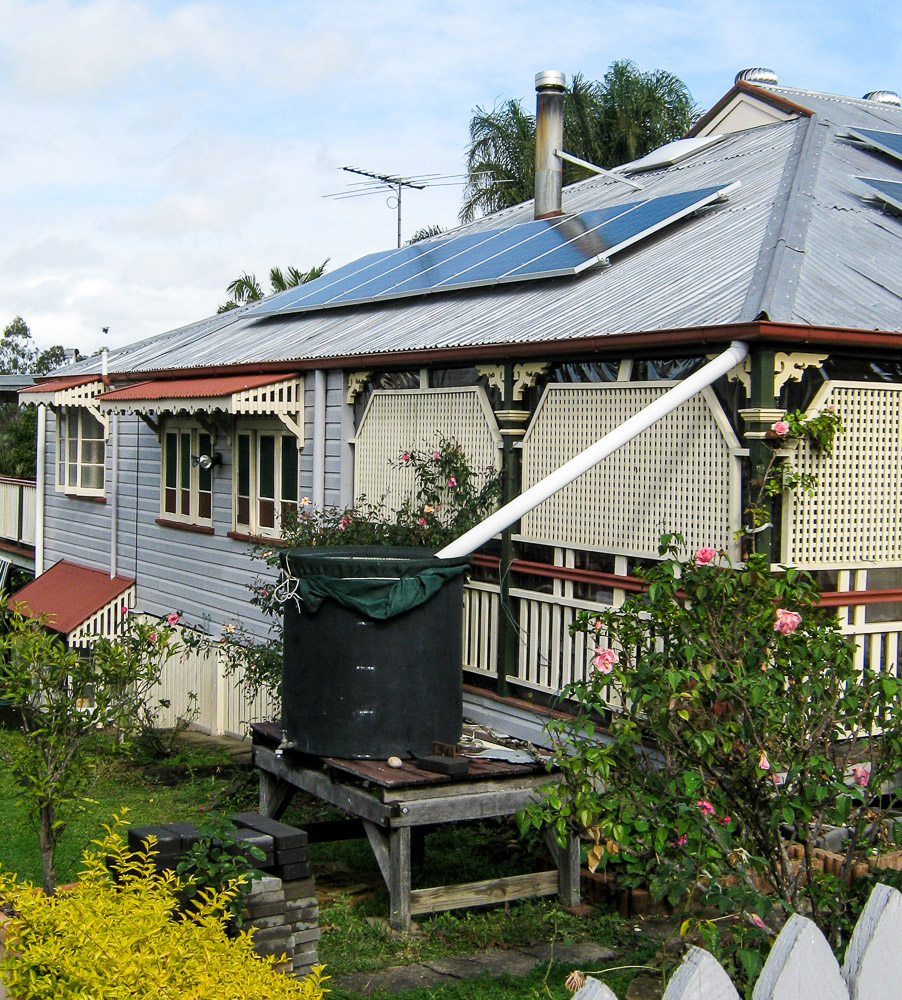
The picture below shows a short squat water tank- however, I think taller thinner ones might be more practical for Wellington, given that so many Wellington sections are challenged for space! They could fit under the eaves and be strapped to the side of the house so as to be stable in the event of an earthquake. I would also have it so that when they are getting full they have an outlet pipe back into the storm water system; its not clear that the one in the photo does this.
I was surprised when Hamilton City Council recently announced its decision to stop fluoridating its water supply. Living in Wellington, I hadn’t realised that in fact only 23 out of 65 councils in NZ still add fluoride to their water.
Fluoride hardens tooth enamel, making it more resistant to decay. However, it is possible to achieve this through the use of toothpastes containing fluoride, or through fluoride tablets. In addition most water supplies have a small amount of naturally occurring fluoride and fluoride is also present in some foods and drinks such as tea.
The problem with not adding it to the water supply is that some children (and adults) who don’t brush regularly or who have very poor diets, with no fluoride supplements, are undeniably more at risk of tooth decay. Arguably, that this could be solved by greater education, but successful education programmes are not always easy to implement.
On the other hand, the problem with adding it to the water is that it is hard to quantify how much people are ingesting. Too much fluoride can cause mottling of the teeth known as fluoridosis, and is also suspected of causing other health issues such as hypothyroidism or weakened bones. Plus, only a fraction of our treated water is actually used for drinking, meaning that a lot of expensive fluoride ($195,000 per year in Wellington) is flushed down the drain.
It is a complex issue – what do others think?
As mentioned in my post on my Feijoa hedge, I maintain that the reason for the great crop of fruit this year was the use of worm castings and worm juice around the base of the trees.
I’m a great fan of worm farms. You can set up the worm bin in a convenient shady spot, somewhere not too far away from the house. They take up less space than a compost bin, and there’s minimal heavy work. Plus, of course, its environmentally friendly to be sending less organic waste to our landfills!
To keep your worms happy, all you have to do is give them your food scraps and vegetable peelings (they eat most things, including shredded paper, but don’t overdo cooked food, protein rich food, citrus or onion skins). Below is a link to a short video I’ve made on setting up and using a worm farm, just to show how easy it is!
http://www.youtube.com/watch?v=hF7KOOvM-8w
You can buy the worm bins at any hardware store and if you live in Wellington’s Eastern or Southern suburbs, I’d be happy to supply worms to start off, just contact me through this blog!
Sarah Free
San Franciscan food writer Marcia Gagliardi , San Franciscan food writer, Huffington Post blogger and flamboyant founder of the internationally recognised Tablehopper food review website visited Wellington recently and has raved about the Wellington vibe and the quality of our eateries.
In a Dompost interview Gagliardi singles out the Maranui cafe, Hippopotamus, Matterhorn, Martin Bosley’s and Floriditas for special comment. The Dompost quotes her as saying: “For pure soul, the Maranui Cafe was a high point. I loved the whole feeling in there. You have little kids, workmen, guys who had just finished surfing, tourists. It was an eclectic, fun crowd.” http://www.stuff.co.nz/dominion-post/capital-life/cafe-scene/8800895/The-culinary-tourist
I’m a great fan of the food at several of the Kilbirnie/Lyall Bay cafes, including the Maranui cafe, but also the Coutt’s Street cafe and Elements. Its great to see our local cafes and eateries getting the recognition they deserve!
Bill is the founder of the worldwide 350 degrees movement, and he recently gave a presentation at the Embassy theatre in Wellington, which I attended. If you would like to know more google 350.org or google Bill McKibben.
Basically, Bill contends that scientists have calculated that no more than 565gigatonnes (billion tonnes) of fossil fuels can be burned before 2050, if the world wants to limit global temperature rise to no more than 2 degrees as agreed in the 2009 Copenhagen Climate Conference. However, according to the British Carbon Tracker initiative, present known reserves of oil, gas and coal already on company books total 2795 tonnes.
Bill is promoting divestment in fossil fuel companies. Apparently this is a growing movement in the USA, with many churches, universities, local government bodies and some private foundations going down this path.
My issues with this approach is that it ignores the current realities of people’s lives. If we want less reliance on fossil fuels and I think we do, even if it is just to make sure that future generations have access to some of this resource, then we urgently need to come up with workable everyday solutions! For this reason, I am interested in rooftop photovoltaics, electric transport, including electric bicycles, and well insulated housing…
I will continue to post on all of these topics , and welcome contributions from others.
Do you have condensation on your windows, or water on your window sills?
This is a common problem in Wellington (and indeed all New Zealand) homes, and there are several things you can do to help.
Two very important things are reducing the sources of moisture inside your home and providing more ventilation- I will talk more about these in a later post. However for now I want to concentrate on one of the most important sources of moisture, and that is the water vapour that can come up through your floorboards from the ground underneath the house. According to research done by Consumer New Zealand, this can amount to as much as 25 litres per day!!
Parts of Wellington that are particularly prone to damp ground include anywhere in the valleys or nearby local streams or rivers. Hence homes in most parts of Wellington, and just about the whole Hutt Valley can be prone to condensation.
If your lawns get soft in winter ( soft enough for medium high-heeled shoes to sink into), or you have the kind of soil conditions where tree ferns flourish, you probably get damp ground in winter…My own house comes into this category.
However, the good news is this problem can often be easily solved… by putting a plastic (polythene) moisture barrier on the ground under the house, as shown in the photo below. It is relatively inexpensive (installed cost about $6 per square metre, cost of materials about $2 per square metre if you do it yourself). You need to make sure the polythene sheets overlay each other by about 10 cm and taped with PVC tape. The sheets should be taped around the piles and bought up the sides of the perimeter of the house..
I can tell you that it is effective. Since we installed ours two years ago (along with insulation in the ceiling , and extractor fans in kitchen and bathroom) we’ve had nothing more than a mere ocassional fogging on the windows and the bread doesn’t go mouldy any more!! Plus the house being drier, is much easier to heat.
I’ve given advice to many homeowners on this issue and am happy to provide additional advice to anyone who needs it , just use the form below to contact me, or comment on this post!

This is fairly sobering stuff… according to a report on Radio New Zealand this morning, council contractors are having to deal with all sorts of hazardous materials in recycling or regular rubbish bags.
The main hazards (apart from back strain due to lifting too-heavy bags), seem to be the dangerous things some lunatics are putting out in the recycling, including used syringes, broken glass, items covered in maggots and even a set gin trap!! Contractors have to put their hands into the recycling to manually sort the different grades of material, so this is putting them severely at risk…
I knew a council rubbish collector years ago who contracted hepatitis B through his work and was sick for months, (luckily recovering eventually)…. so this is not a trivial matter..
Come on people, rubbish collection is an important service-as residents we can do better than this!! Broken glass shouldn’t be in the recycling at all; wrap it and put it in the regular rubbish. Wash recycling items, squash tin cans and put the lids inside. Only put approved recycling items in the recycling bin- ring the council help line or look on their website if in doubt.
Well, of course John Key was being simplistic when he commented a few weeks ago that “Wellington was dying and we don’t know what to do about it”.
While the Wellington economy has its challenges, the article in the Dom Post today points out that there are an increasing number of very successful Wellington-based companies, particularly in the accounting, business administration and IT sectors. The article mentions several, including :
Xero, providers of on-line accounting software
Jig lab, providers of film quality 3D computation and digital fabrication
Silverstripe, an open source provider of website development software, providing apps for iphones such as Metlink, and powering up President Obama’s sucessful social media campaign.
http://www.stuff.co.nz/dominion-post/news/8775757/Making-capital-The-state-of-our-city
In these pages, I’d like to feature some more about some successful Wellington companies, particularly those based in the Eastern suburbs. So… watch this space… and if you know of people who are doing interesting stuff… or just doing ordinary stuff really well… let me know!!!
Came home at about 5pm yesterday evening to see a kingfisher perched on our power line. We are very close to the Town Belt, so we get lots of tui, waxeyes and fantails, but this is my first sighting of a kingfisher for several years! The photo quality isn’t brilliant as it was getting dark. Any comments? Are others seeing an increase in native birds at present?

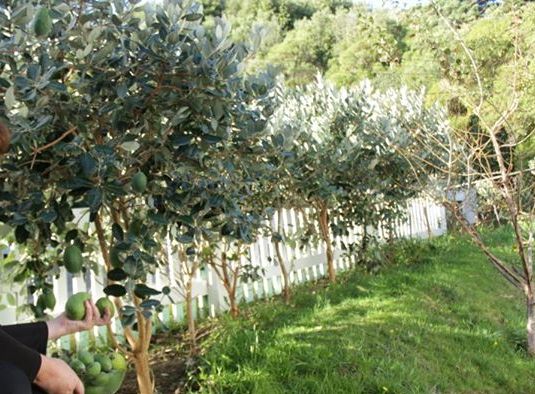
Three years ago, rather than replace our small picket fence with something higher, for more privacy I decided to plant a Feijoa hedge. Its been remarkably successful and has become a bit of a talking point in our neighbourhood. Feijoas have attractive foliage and pretty pohutukawa-like flowers in the summer… And then come autumn we had the pleasure of a lot of fruit.
I’ve planted several different varieties so that all the fruit doesn’t come at once. I’d recommend Unique (self fertile) , Anatoki and Waignaro as having done particularly well for me- but your local plant shop can probably give advice for your specific location.
They grow well in coastal areas such as Wellington, are tolerant of most soil conditions, will cope with wind and slight frosts, but do need sun!! My other secret is plenty of worm castings from my worm farm- more about that in a later post…


 Sarah Free