
Most of us have bits and pieces of electronic or computer equipment lying around, lets be honest. Rather than simply taking these to the tip, they can be recycled so that the valuable metals can be retrieved and dangerous components disposed of safely.
Sustainability Trust in Central Wellington (2 Forresters Lane, just off Tory Street, Ph: 04 385 0500) has an e-cycle waste depot. Typical costs are:
laptops -$5
Printers, scanners, fax machines- $12
CRT computer monitors- $15
TV’s – $25
They also recycle cables, toner cartridges batteries etc, and will accept domestic appliances. For a full list of costs see http://sustaintrust.org.nz/e-cycle/e-cycle-charges.
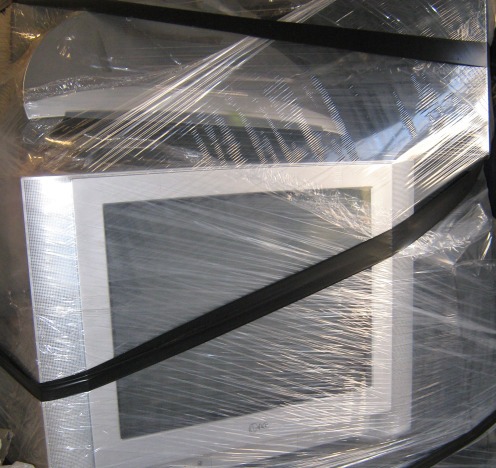
Yes it costs to recycle… but the alternative is wasteful too. Below is a photo of some of the e-waste packaged up and ready to be delivered.
Personally, I’m in favour of changes to the electricity sector which facilitate more active market participation by residential users. This would include metering and in-home display options combined with time of use pricing that more accurately reflects the cost of producing electricity at different times of the day. For example, at present, peak loads in most parts of New Zealand occur in winter evenings, meaning electricity is expensive then, as additional thermal generation will probably be used. With the NZ electricity market, all electricity sold at one time is priced at the cost of the most expensive generation. So households are paying for their collective inability to control load, through higher average prices. Load control doesn’t necessarily have to mean energy hardship either. Alternative heating methods, ( eg woodburners, gas) and smart appliances that operate in off peak periods are obvious solutions.
Since my original post on this, where I took a position of cautious support, I have become aware that the issue is complex.
There is definitely a view among some residents that long haul flights to Singapore direct from Wellington could be good for the Wellington economy, encouraging business to come here, and good for local travelers, with roughly six hours saved per return trip from not having to go via Auckland or Christchurch. From an energy-efficiency perspective, there could even be some carbon benefits, as 25% of the energy used in a flight is consumed during take-off. So if planes take off once rather than twice, that’s a fuel saving, not to mention savings in baggage handling and other services. Also the new planes that are proposed are apparently more fuel efficient than the existing fleet.
On the downside, there are concerns around extra noise (hopefully minimal), the vibration from planes taking off (which apparently residents in Maupuia experience), and concerns about potential rises in landing fees (currently $25 a flight for owners of small planes). However most of the concerns which I’ve heard expressed are around the impacts on the landscape and ecology of the harbour, and also whether the economic returns would justify the cost.
The resource consent which the Council and Airport have jointly funded will cover all aspects of the proposed extension including environmental impacts and economic feasibility. Extending to both the north and south will be considered.
Any comments?
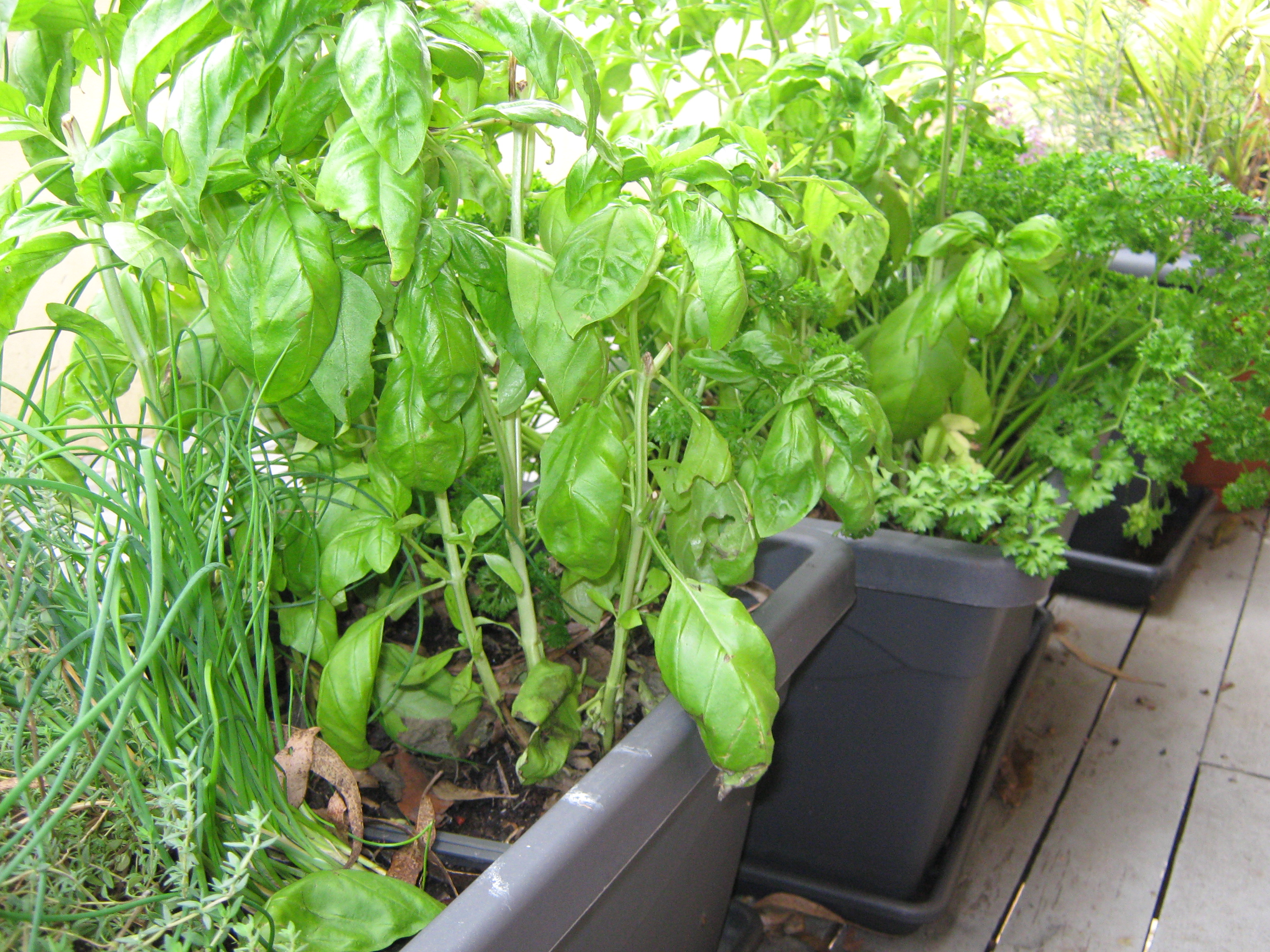
 Every now and then I just like to post on just a simple but cool idea. This picture is of a row of herb pots that my Brisbane-based daughter has on her bathroom window sill. A glass is kept by to make it simple to remember to water them… They are renting… and don’t have the time or inclination for a traditional vege patch, but this means they have occasional herbs for cooking. I’ve also posted a more serious effort -this time a cafe- herbs in planter boxes on their deck. Any other good ideas, especially from those in cooler climates? Send your photos in!!
The major slip in Kingston yesterday bought back memories of our slip around six years ago when we lost 24 cubic metres of our bank, due to a combination of a wet winter, a neighbour’s leaking water pipe and inadequate storm water provision for the houses on the hill above us.
Thankfully we were insured, and the payment from EQC was sufficient to clear the slip, put in some retaining walls and then repair the driveway.
The Council also eventually agreed to replace the 80 year old sewer main, and to install a proper storm water system where previously neighbouring houses (which dated back to the 1920s) simply relied on soak pits.
I was grateful to our local councillor at the time (now mayor) Celia Wade-Brown for her help, and it highlighted to how much we rely on basic infrastructure being in good condition. Keeping up with work on the three waters (storm, sewerage and potable water) consumes quite a proportion of the Council’s budget, but it is money well spent.
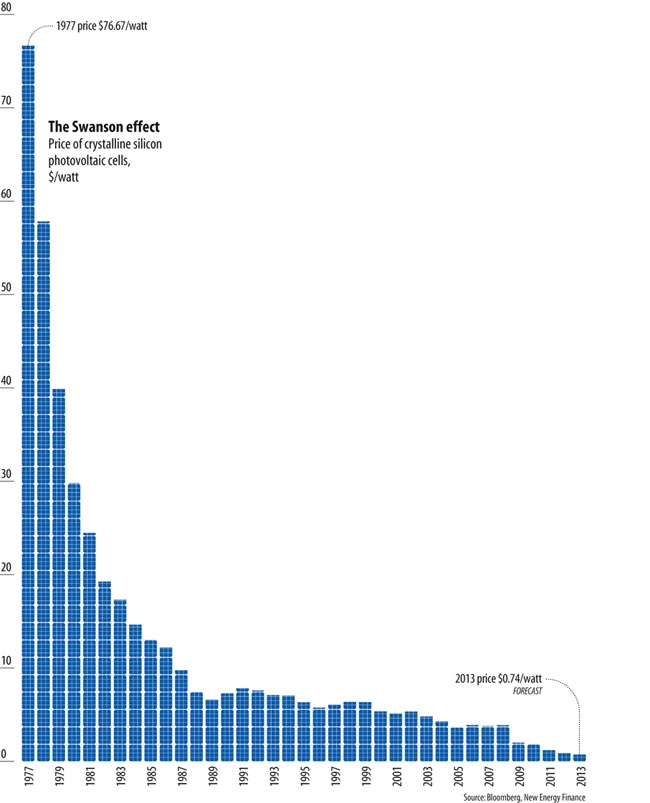
The cost of solar panels has fallen dramatically recently, from around $20 per Watt in 2008 to just 74 cents per Watt in 2013. Solar panels in Auckland have around a 15% efficiency factor. So a 1KW array might output an average of 150 Watts over the course of 24 hours, giving 3.6 KWhrs per day, a 2Kwatt array would give 7.2 Kwatt hours and so on Wellington and other places further south would theoretically get slightly less.
Meridian Energy’s buy-back offer is 25 cents per KWhr up to a maximum of 5KWhrs. Personally, I think this means an install of around 2Kwatt makes the best economic sense for NZ residential installations at present, unless you have unusually large daytime loads. At current prices that will cost you about $1500 for the PV,s then you’ve got the cost of the inverter, and the install. We had a quote for around $9000 all up ( the inverters are still quite expensive). Not bad and it may be marginally economic. If not now, it will be soon on current trends… Then NZ engineers will have an interesting time figuring out how PVs on residential roofs affect the rest of the electricity system….. There could be additional investment required on local distribution networks to cope with power flows in opposite directions to the original design
Has anyone had any experience installing solar PVs in their home? I’m interested in any NZ experiences!
Walking around the streets of Ipswich, or indeed anywhere in Queensland, and I’m struck by the number of houses with solar panels (photovoltaics or PVs). Just in case there is confusion, these are for generating electricity not for heating water. Part of the reason for their popularity here is that the Australian government offered (I’m not sure whether they have changed this now) a hefty subsidy for installing them, plus guarenteed buy back arrangements if you generated more power than you could use, your extra power being fed back into the grid.

Presumably it made sense at the time, perhaps to support and grow a fledgling industry and because Queensland with its hot climate has cooling and irrigation loads, which fit well with photovoltaic output.
Currently our NZ government is opposed to any interference in the electricity market via subsidies, so we won’t be seeing big roll-outs of PVs just yet. But as prices have steadily come down, more NZ homeowners and businesses are having them installed. Meridian energy offers a buy back rate of 25 cents per KWhr for the first 5 KWhr, dropping to 15 cents after that. There was some talk of Kiwibank offering a $2000 loan to help with the install, but I’m not sure of the exact details)….maybe some of you can fill me in!
Personally, I think PVs do have a great future in NZ, and I’d love to hear from anyone who has had experience with installing an array at their home or business……I’m sure this is a topic we will hear more of in the future!
Have been visiting family in Ipswich and am impressed with how the houses here are designed to cope with this subtropical climate. Lots of solar panels here too-more about that in the next post!
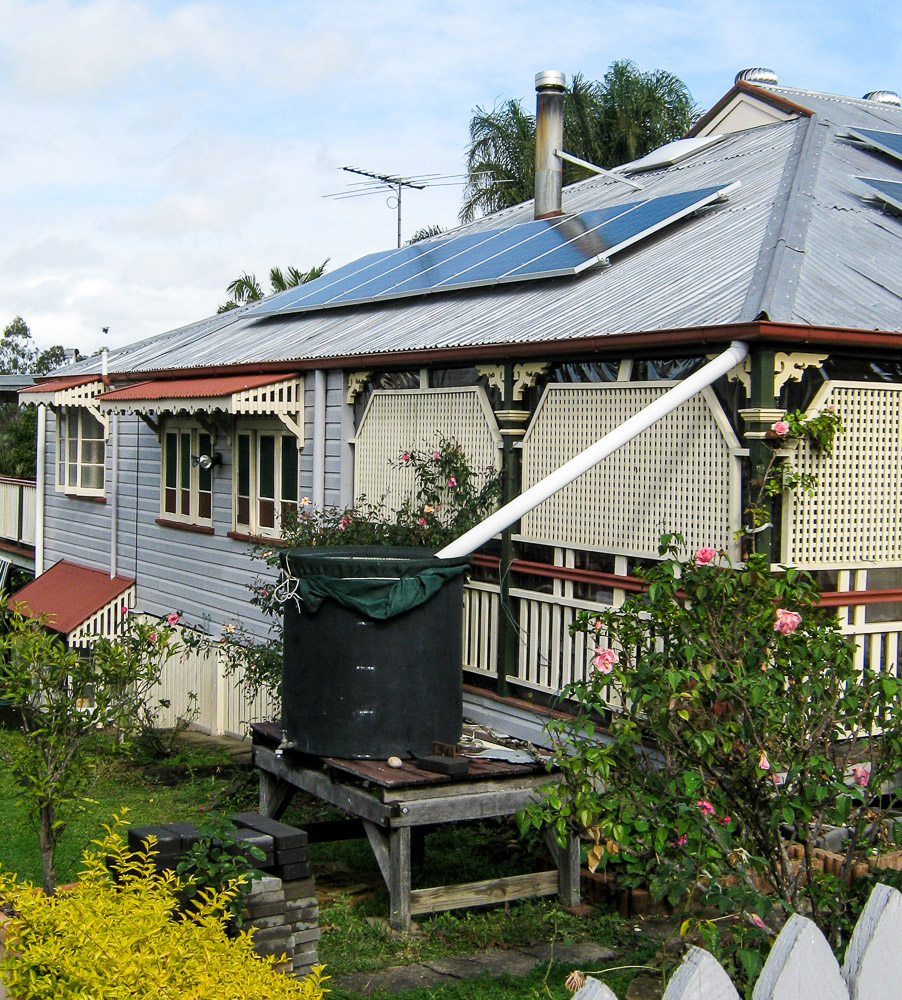
The house in the photo is typical. Fixed awnings over north-facing windows block summer sun,but still let in lower-angled winter sun for warmth. Almost all houses have big overhanging verandas on the east and west, with trellis shields, especially on the west. There is lots of provision for airflow-houses are mostly raised at least a metre off the ground, and there are large trellis false “front doors” so that the actual front door can be left wide open without losing privacy. In some cases, large shrubs or other plants are grown in pots on the verandas to further enhance cooling.
These passive cooling features must reduce the need for aircon which can only be a good thing!
In Wellington, we generally need to design more for keeping houses warm rather than for keeping them cool. However, I have seen some locations (for example of west facing sites in Miramar and Strathmore) where summer overheating can be quite an issue. Maybe some of these ideas might be helpful!


 Sarah Free